Well, I have not really had time to get excited about this trip as I have been so busy. Even the orientation day with the rest of the teachers on the trip didn’t really get me feeling that it was real. Now I am here in Auckland airport waiting for my flight and am allowing myself to get just a little bit excited about the fact that in just a few hours time I will be on the of the side of the world.
When I was told about the Salamanca Immersion scholarship and decided to apply I didn’t want to hope too much that I would get it in case I was disappointed. It has been a hectic and long term and I have to admit to being absolutely shattered and looking forward to sleeping as much as possible on the flight!
I am also a little apprehensive about staying with my host in Salamanca and not being able to communicate – you know those awkward silences when you can’t of anything to say or the frustrated panicky silences when you are trying desperately to finish off the sentence you have ambitiously started? If I understand the information I have been given correctly, I am staying with a single lady which is great but also quite daunting; what if

we have nothing in common? It is often easier to keep conversations going when there are children around, with just the two of us I am worried that I won’t be able to think of anything to say…
But nothing ventured, nothing gained and I have a fantastic opportunity which I am going to grasp with both hands and both feet! I may well be more exhausted when I return than now but I know I will have learned heaps about the language, the culture and myself.
Here goes……

Category: Uncategorized
Billibilli & Cava


 Saturday was our day for being tourists and learning a little more about the culture of Fiji. One of the important things we learned was the concept of “Fiji time”. Our itinerary said that we would be picked up at 8.30am so we were all waiting at the end of the drive at 8.30am! We were still waiting in the hot sun an hour later despite phone calls to the tour operator and were feeling frustrated and overheated, all ready to complain and ask for some recompense. However, when our drivers arrived they were friendly and smiley, telling us stories of life in Fiji and pointing out places of interest along the way. They charmed us all and as the day went on we realised that we probably just had to accept that Fijians live their lives to a different rhythm. Our driver pointed out the high security prison which has no fences, flood lights etc that are the usual signs of a place that houses a country’s most dangerous criminals, and explained about the experiment i n providing the prisoners with training and educuation to reduce recidivism which has been a huge problem in Fiji. Lack of educations and opportunitis is als othe biggest root cause of criminality (apart from addiction to cava, which you can argue is the result of not having a job or any prospects of one.) That is linked to the chauvinistic heritage that the man earns a living and the woman stays at home and looks after the house and family) In more recent times the economy and trade has meant that there are plenty of jobs for women in the low paid service industry and factory line manufacturing and little for men. So men have essentially become disenfranchised and have lost their sense of self-respect and pride.
We soon reached our destination and were kitted out in lifejackets before climbing into the long, narrow dugout boats. These were powered ny an outboard motor – very similar to the ones in Vietnam we crossed the river in. The local boatman revelled in racing up the river, the spray from the water as the boat cut through it going upstream soaked us but it was all part of the fun. It is a wide river with lush vegetation on either side but unfortunately many of the native trees seem to be being strangled by bindweed which is rampant. Our guides told us that the local community are fighting a losing battle against it and are worried that indiginent wildlife will disappear as the flora does.
We soon came to the “Village” – a tourist village which tries, like places like Whakarewarewa in Rototua to preserve the ways of the past for posterity. A so-called living and working village where we were treated to the traditional Cava ceremony – welcomed onto the whare, offered cava and became part of the community. Cava is a strange brew – maybe I don’t have a discerning palate, but to me it tasted like muddy water with a kick. After that we were taken on a tour and shown the “traditional” school, shop and local crafts where we were encouraged to part with as much money as possible! I am being rather cynical; the tour was informative and interesting and the people were very welcoming, but, at the end of the day they just wanted to tyake our money off us! And why not? As long as it was going to the people that needed it and not into the coffers of the already well-off! I bought some trinkets and Christmas presents which were very pretty to send back to the UK.
Then we carried on upstream to the waterfall; an opportunity for a bit of a walk – it reminded me of the Waterfall Walk in Ingleton; it was a relatively roughly made track that led along a tributory to the river up the valley for about 10 minutes to a waterfall. The water dropped from about 40ft into a brown pool. We were assured that the water was clean despite the murky colour which was due to the recent rain. Since it was hot and humid we decided to dive in. The girls were keen to sample the water and Jo, Jill and I follwoed them in. I swam out to the waterfall to recce it for the girls and ascertained that it was okay, kept a close eye on them as they swam out and shepherede them all back to the rocks at the edge of the pool where they splashed around until our guide beckoned us out of the water to go back to the boats.
On the way back downstream we had the opportunity to go on the traditional “Billibillis” – basically a few thick bamboo poles lashed together to make a raft that is punted down the river. We all piled onto a large, very stable Billibilli but we saw young boys and girls on the river in crafts made of just 3 or 4 bamboo poles which looked very lightweight and not a little dubious! I was disappointed that we were transfered back onto the boats for the rapids – I had secretly hoped that we would have had the excitement of shooting the rapids on the Billibillis! But then, I guess safety comes first!
Sock it to the angels, Liz!
 A good friend of mine died on Saturday. I heard the news through a mutual friend of mine and Liz’s; our children grew up together and we spent a lot of time together. I am deeply saddened by the news that she has died and it has struck me in a way that I hadn’t expected. She has been battling breast cancer for a good few years now. I don’t remember when she was first diagnosed but it must be at least 7 years and for a while it seemed like she had beaten it.
She was a fighter – isn’t that what people say about friends, sisters, mothers, aunts who suffer? But Liz was, not one to give up without a fight; she was a feisty one. I remember when her hair grew back after chemo all short and spiky she dyed it bright red!
Liz was a wonderfully vibrant person, who I remember always with a smile on her face. No, more than that, a huge grin and a wonderful laugh. I remember well the “Frustrated Mothers” quiz team that won the local school PTA quiz night every year – we morphed into the “Desperate Housewives” (or was it the other way round!?) but still won and it was really down to Liz’s depth of knowledge of Literature, film and TV that we won so consistently, the rest of us just made up the numbers! I also remember nights down at the pub, dancing and singing, she was the life and soul of the party. I wonder how much of that PC (post cancer) was the desperate desire to live every moment as if it was her last!
I think it was after she was diagnosed that Liz persuaded me to swim 3km in Lake Windermere to raise funds for Breast Cancer, we trained together in the pool at Ingleton and then set out on a freezing cold day on the 1st September to plunge into the chilly choppy waters. We did it and strangeley enough, enjoyed it. Thanks, Liz. That started me on a spate of runs and cycle rides to raise funds for Breast Cancer – it is scary how many of my friends have suffered, recovered or died from this dreadful disease.
Since coming to New Zealand I have maintained contact with Liz through Facebook and have seen the strength she had. I was worried over the last few months with her comments about continuous bouts of illness but she maintained her feistiness and determination not to give in. I don’t know the details of how the cancer had progressed, I just know that when we left Ingleton to come across the world, things were looking positive. Or maybe Liz knew all along and just didn’t let on to any but those closest to her. I was told that she was told only last week that the cancer had spread to her liver and that she only had weeks to live. Luckily her lovely girls made it home from university to be with her when she died.
Her girls are beautiful young ladies, Kate babysat for me when my boys were younger and Immy and Lachlan were very similar in age so played together when they were younger. I also taught them both at QES. I am sure that Liz was very proud of the way they have grown up, and so she should be because her strength and vivacity is what made them the way they are.
I too lost my Mum at the age of 20 so I know something of what they might be going through right now; time is a great healer, but even though the pain lessens over the years the memories remain. And so they should because Mums are special people; there will be times when really all you want is your Mum and even now, 30 years later, I think of my Mum almost everyday.
But I risk getting maudlin and lives, however short should be celebrated. And Liz’s might have been short but it was definitely worth celebrating. So, I raise a glass to you Liz! Go sock it to the angels!
Fiji – Bureta Village, Ovalau
A hard bed, a crowing cockerel and cava pounding late into the night did not make for a very sleepful night but at least we didn’t have to get up too early! It is a little cooler on the island in the mornings which is welcome. It really is a lovely setting; the small, mainly wooden or corrugate iron houses surround a central green very reminiscent of an old English feudal village. Each house has its own small plot of land with a variety of produce; flowers, as they are all over Fiji, provide splashes of bright colour – pinks, reds, purples. The leaves too are colourful and the sun shines through them to give them a sort of iridescence. Cassava is here in abundance and taro, bananas and coconut also grace most gardens.
Breakfast was a lavish affair and mainly kiwi-style – cereals, toast and pineapple jam, baked beans, spaghetti. Banana cake and fresh pawpaw and pieneapple gave it more of a Fijian touch. First stop after breakfast was the medical centre to hand over the baby scales and the stretcher we had brought. The reception we received was generous and quite humbling. Their gratitude seems to know no bounds and we lost count of how many times the word “thank you” was uttered. Jill was asked to bless the gifts and photos were posed for. In return they presented us with a mat and some locally made coconut oils and soaps. We didn’t realise until a few days later just how much of an honour it was to have been presented with a mat – they are often made for weddings and other ceremonial occasions. Hand-made from the pandanna leaves, they will apparently last for a good twenty years. Marama, in whose house we are staying, is one of the ladies who makes the coconut oil – a cooperative was recently set up and a group of women extract and process the coconut oil in the traditional way, by hand, which must be a painstaking job. The oil is reputed to have healing powers and as well as being used to add shine to hair it is also used on skin to lighten scars and heal dry and chapped skin.
Next we were whisked off to go to the village school to deliver the maths and English books that we had brought. We have already seen the children this morning, on their way to school. The girls dressed in their pretty pink dresses and the boys in shorts and white, white shirts. Whenever I see films of children in third world countries going to school, I am always amazed by how clean, neat and tidy they look; proud to be wearing their uniforms and to have the opportunity to go to school. These children also seemed very happy as they smiled and skipped their way along the path. The Headmaster was very welcoming and accommodating considering that this was an impromptu visit. Our girls were keen to sing as a way of saying hello and so the Head Boy was sent for and asked to round up the children and send them to the library. Our songs were replied to by two form the children. We have noticed here just how beautiful the singing is here – loud, tuneful and melodic.
Fiji Day 3
Moving Day!  There is paint to be bought so Jill and I set off to catch the bus. We took a roundabout bus tour all around the houses before going back past St Christopher’s 20 minutes after getting on and then another 20 minutes on to the paint shop! Never mind, we had plenty of time to chat and look out at the houses and the people. One of the things that I like are the mottos on the schools that we pass. The one for Nakasi High School I think is particularly down to earth and simple; ” In all things be human”. It made us reflect on the “striving for excellence” that many NZ schools have, including Dio. Very laudable, but have we lost sight of what education and learning is all about? Strive to do your best, yes, but your best may not necessarily have to be achieving Excellence as a grade. Anyway, what is “Excellence”? – a benchmark set against some given criteria that can, at times, be fairly arbitrary!

Anyway, by the time we got back, Jo and the girls had sorted out all the toys, books and clothes we were taking to Ovalau. A quick lunch and soon we were all aboard the bus en route for the ferry. When I say “soon”, I mean in the Fijian sense of the word. I love the laid back pace of life here; it is too hot to do anything fast and so the bus came when it was ready which was about half an hour after we were!
As we drove north the terrain changed; much denser bush because we left the built-up areas. Taller trees with splashes of red at their crowns started to dominate after the scrubbier areas with banana groves and coconut trees. Many of the dwellings were much poorer, more ramshackle, corrugated iron and wood but set in their neat little parcels of land planted with cassava, vegetables and flowers. 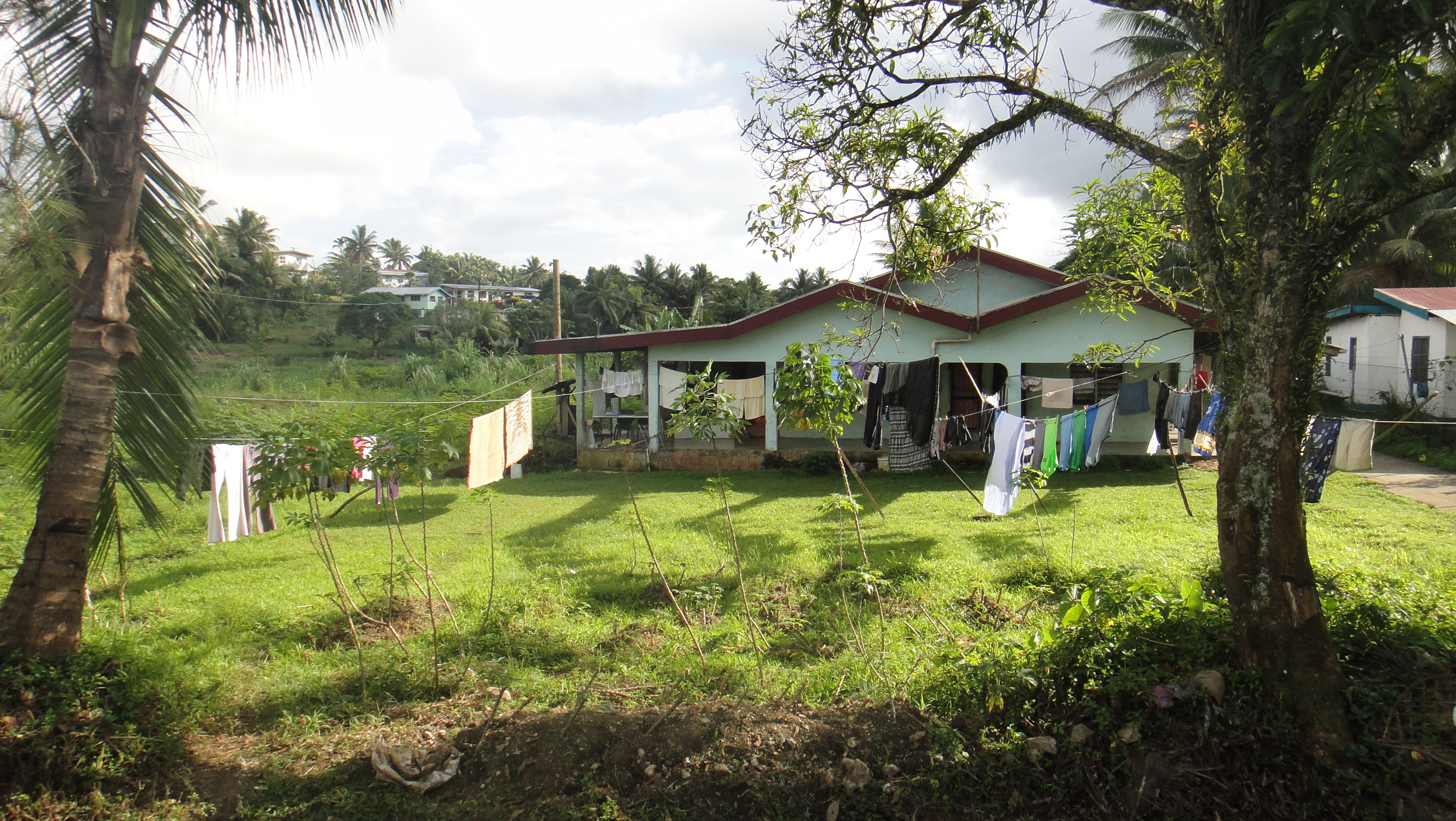 The mountains looked impressive and I was filled with a longing to get out and climb. I wonder if there are treks in them thar ‘ills? The trip across on the RO-RO was very pleasant; the islands dotted around the ocean are bright splodges of green in the dark blue of the water.
 The ferry manoeuvred it’s way out of the port through the shallows where little mini islands of mangrove stand proud. We basked in the sunshine and it almost felt like we were on holiday as we chugged across the sheltered stretch of water to Ovalau. The bus drove us straight off the ferry and on to Bureta village where a welcoming committee awaited!
The village is nestled in a valley surrounded by hills – not very big but they look like they might be limestone – I must check – maybe there are caves?! 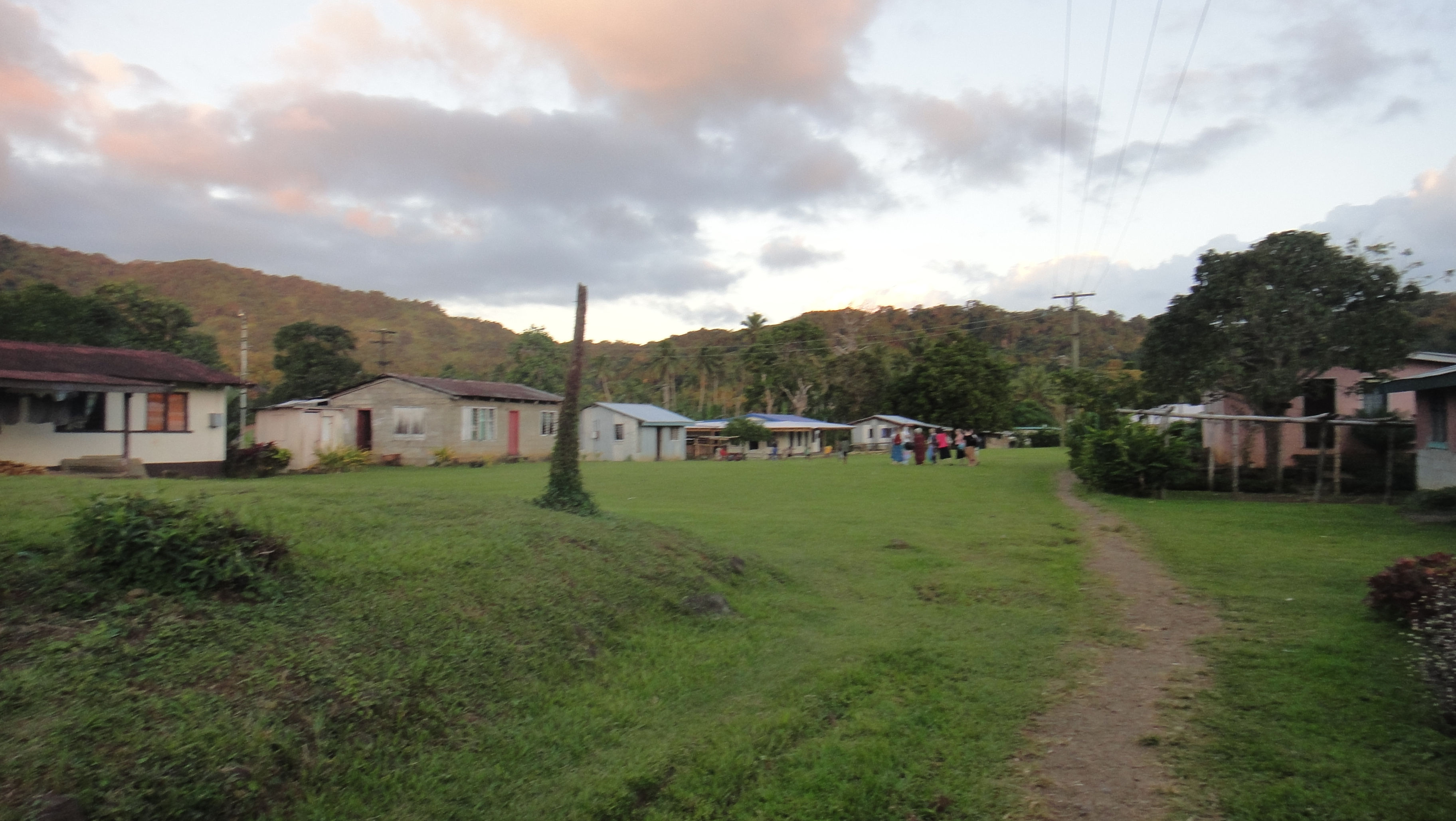 We were taken to the house of one of the main families who were to be our hosts for the next two days while someone went to find Marama who is our main contact here. Jo and Jill were welcomed as old friends as they had visited last year, and the rest of us were warmly welcomed and introduced. We were relieved to learn that we were all to stay in the same house (apart from Jill, who was chief guest and had the honour of staying with Donato and Vany) which belonged to Marama’s nice who was also called Marama.
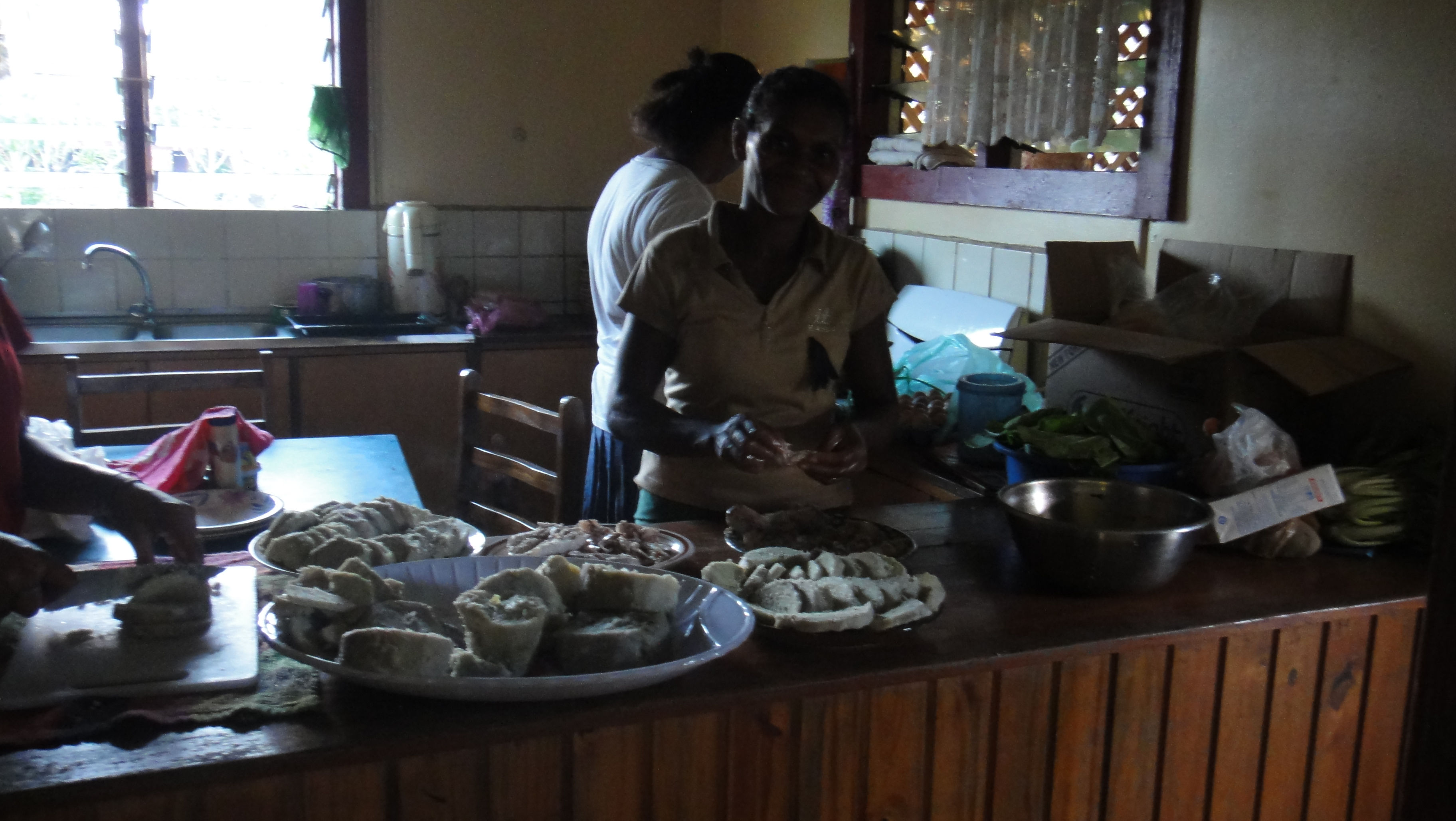 Dinner was lavish – the women had clearly been hard at work all day preparing a feast. There was soup, which was delicious, home made bread, chicken curry, chicken stir fry with veg and noodles, rice and taro – a root vegetable which is the staple diet of the islands. It is a strange fibrous vegetable with not a lot of flavour, but eaten with the soup it was quite palatable.
It was rather unnerving and a little uncomfortable as our hosts did not eat with us but waited until we had finished. Nevertheless, we ate heartily as we were hungry and the food really was excellent. We stayed and chatted for a while and they asked to see the things that we had brought for the kindergarten. 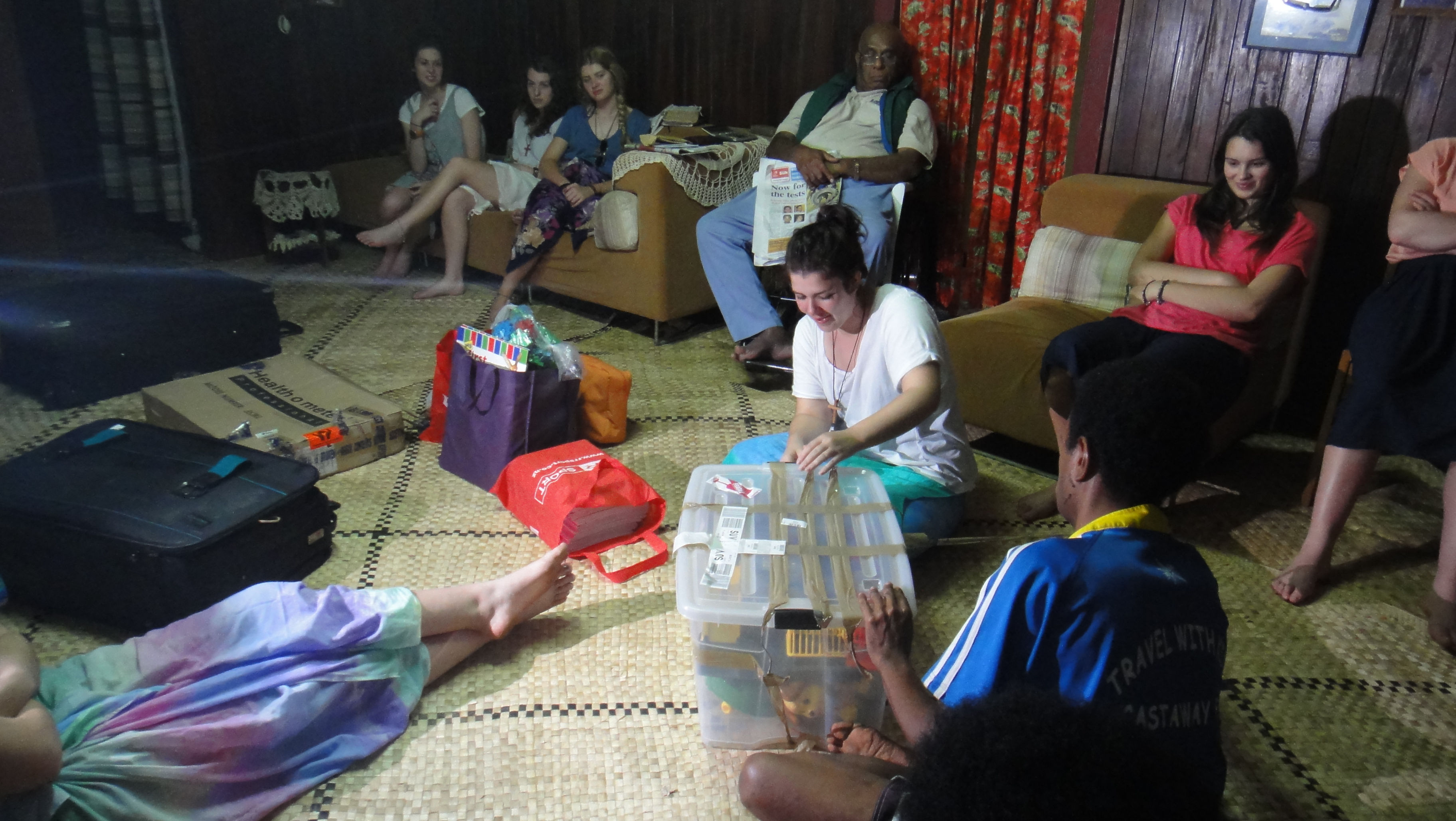 It was funny because Sola, one of the young boys (probably around 19/20) who had been helping in the kitchen and was very chatty and friendly, ended up sitting on the floor with the girls eagerly unwrapping the boxes and playing with the toys we had brought! Donato is the main man of the house, is wheelchair bound and he is apparently the main driver of the village and instrumental in getting things like the kindergarten built. He will not be able to get to the kindergarten tomorrow so wanted to see the toys this evening.

So we are all now in bed; I can hear the gentle snores of the girls next door as they sleep marae style on mattresses. Jo and I have our own rooms although my bed is as hard as aboard! Outside I hear the clicks of the geckos and the rhythmic hum of the cicadas. There is also the steady thumping of the village men pounding the cava roots. Tomorrow promises to be busy so I guess I should try to sleep a little too before the cockerels start!
Fiji Day 2
 I think I slept quite well but dogs barked incessantly until midnight and the first cockerel started crowing at around 3am! There must have been a whole coop full of them or else every household has one and they crow in chorus or in competition! Communion at 6am was a new experience for me and for the girls – not communion per se but the very formal format and the recital of psalms. Some of the girls went back to bed afterwards but most came for breakfast and demolished pancakes, toast, cereal, yoghurt, bananas, etc. Then they spent a couple of hours working with the children in the kindergarten. They were amazed by how affectionate but how demanding the children were and how they climbed all over them. The girls also sorted out the mound of stuff we had managed to cram into our luggage – clothes, puzzles, books, toys, toiletries – to give to the children here at the Home and also to the school and kindergarten in Bureta.
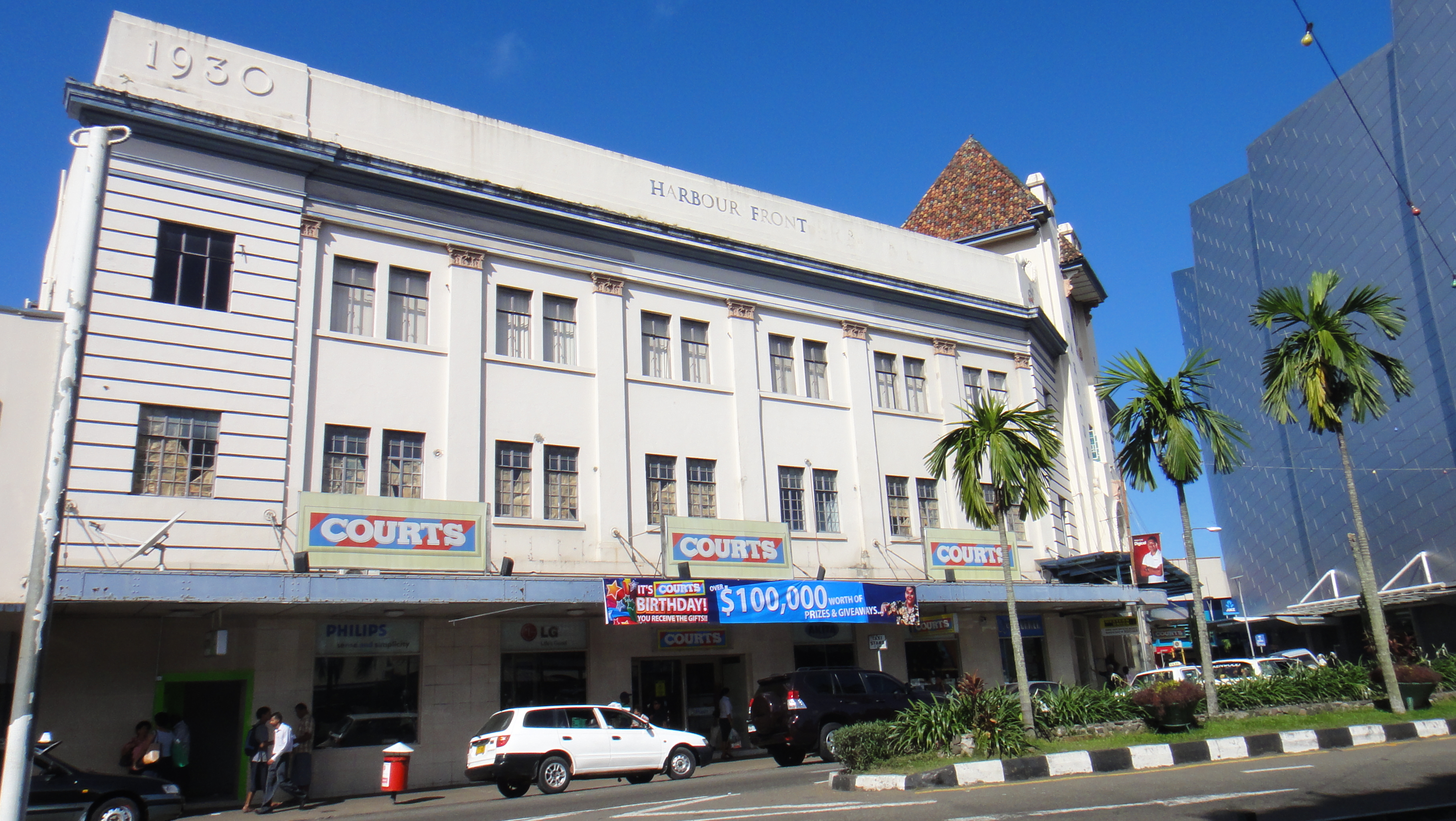
Jo is still feeling under the weather with a sore throat and an aching leg but she insists on coming along for the day’s activities. There was no sign of the Sisters and in the absence of any other instruction we decided to take the girls into SUVA for lunch on the bus, have a look around the market and then visit PureFiji. Riding the buses proved to be a highlight for us all. It is a great way to see “real” Fiji – the buses go all around the streets and residential areas where we could see how Fijians live. The open sided buses with roll up canvas “windows” provide a refreshing breeze and respite from the heat which is quite oppressive today. We also enjoyed the upbeat music that blares out and the continuous call of “Bula” as we pass people in the street. The girls do stand out with their fair hair and pale skin and seem to attract the attention of children with their mothers and, of course, the young men! The greenness that we noticed yesterday is remarkable and as we travelled into Suva we had views across the expanse of vegetation – tall pineapple trees, bright flashes of pink and red hibiscus and lots of other brightly coloured flowers, to the mountains and then also to the ocean.
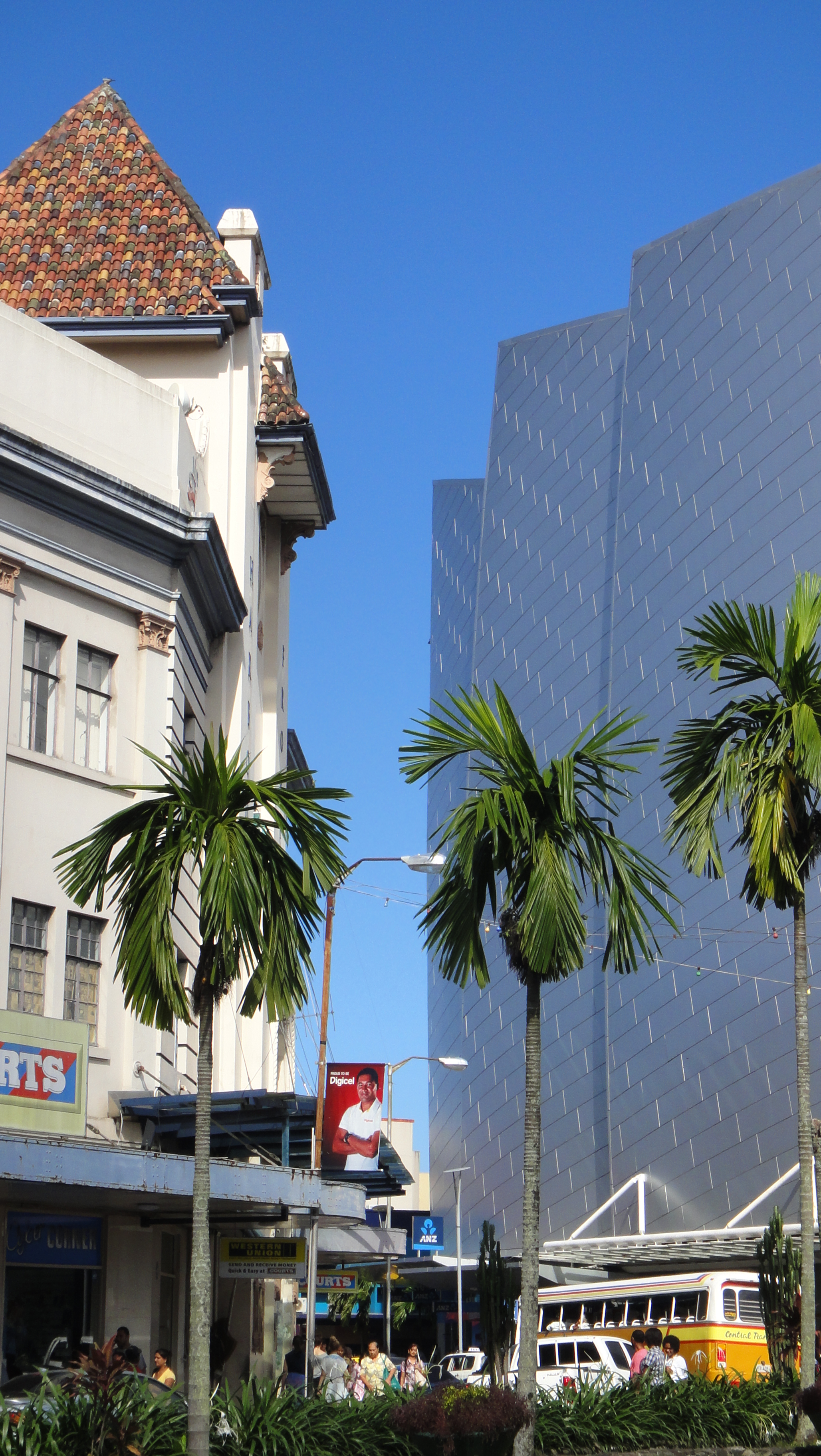 The bus station is close to the port and main food market and once we had dodged the buses coming in and out of the bus station and made it safely to an island of relative calm we decided on a plan; head to the plaza where we could get food and toilets but not necessarily in that order! The plaza is a large shopping mall which we happily explored for half an hour or so, in which time I managed to buy Bula shirts for my boys. The girls seemed happy to have just half an hour and were remarkably reluctant to be given any more freedom to explore. Maybe it is good that they are a little nervous and respectful of the potential dangers but I find it unusual, nonetheless. It seems that they are not so streetwise as they first appeared!
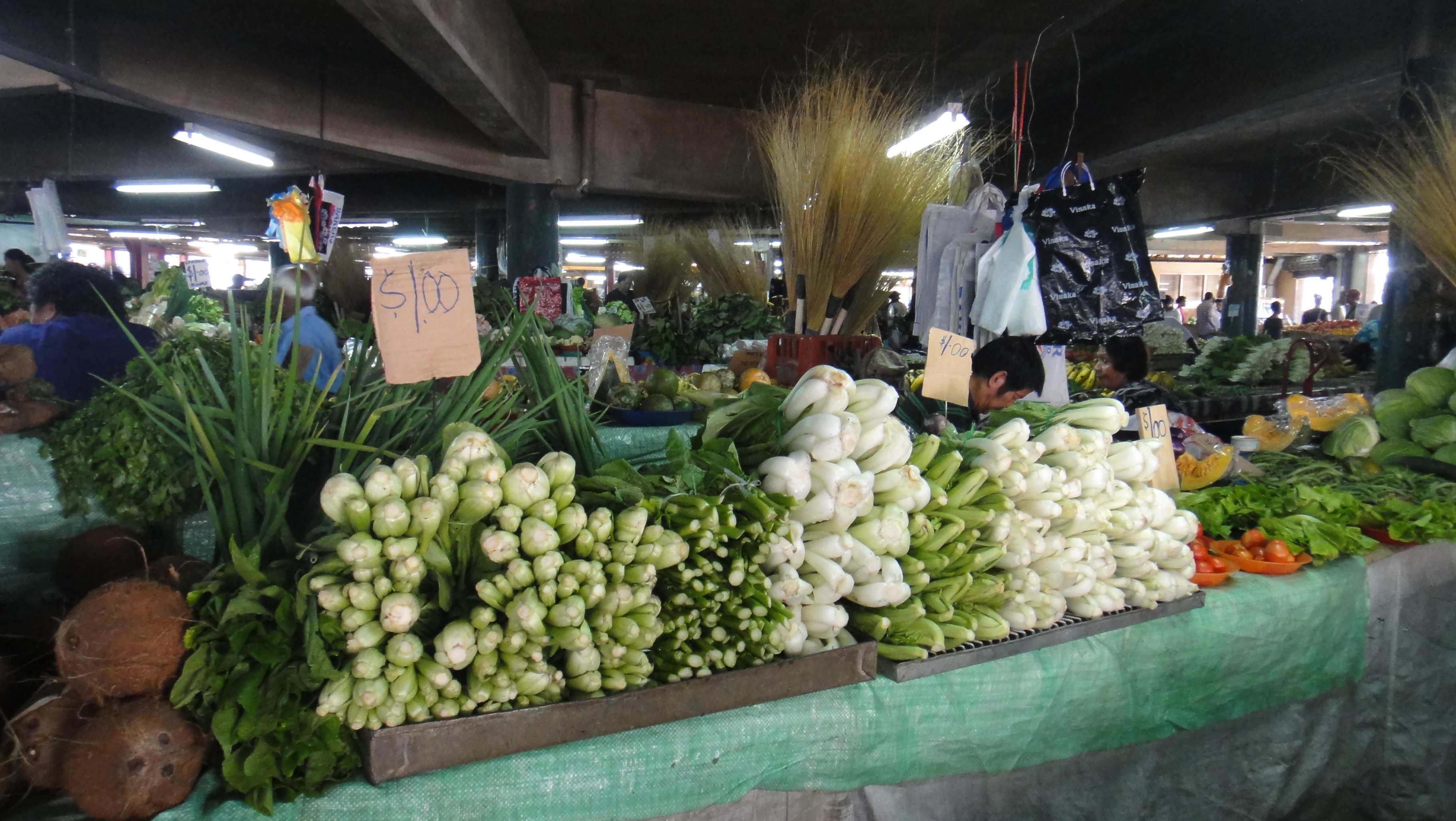 A tour of the market was next on the agenda and I suspect the girls were a little disappointed as it was predominantly a fruit and veg market. We too were surprised as we had expected a wider variety of stalls. I always find markets fascinating though – the way that people present their wares, the care they take to make them look attractive – I mean, how can taro and cassava look good? But they do! It was interesting to see that most things were sold by the “heap” and not by weight. We bought a “heap” of green beans for $3 and a “heap” (6) mini pineapples for $5.
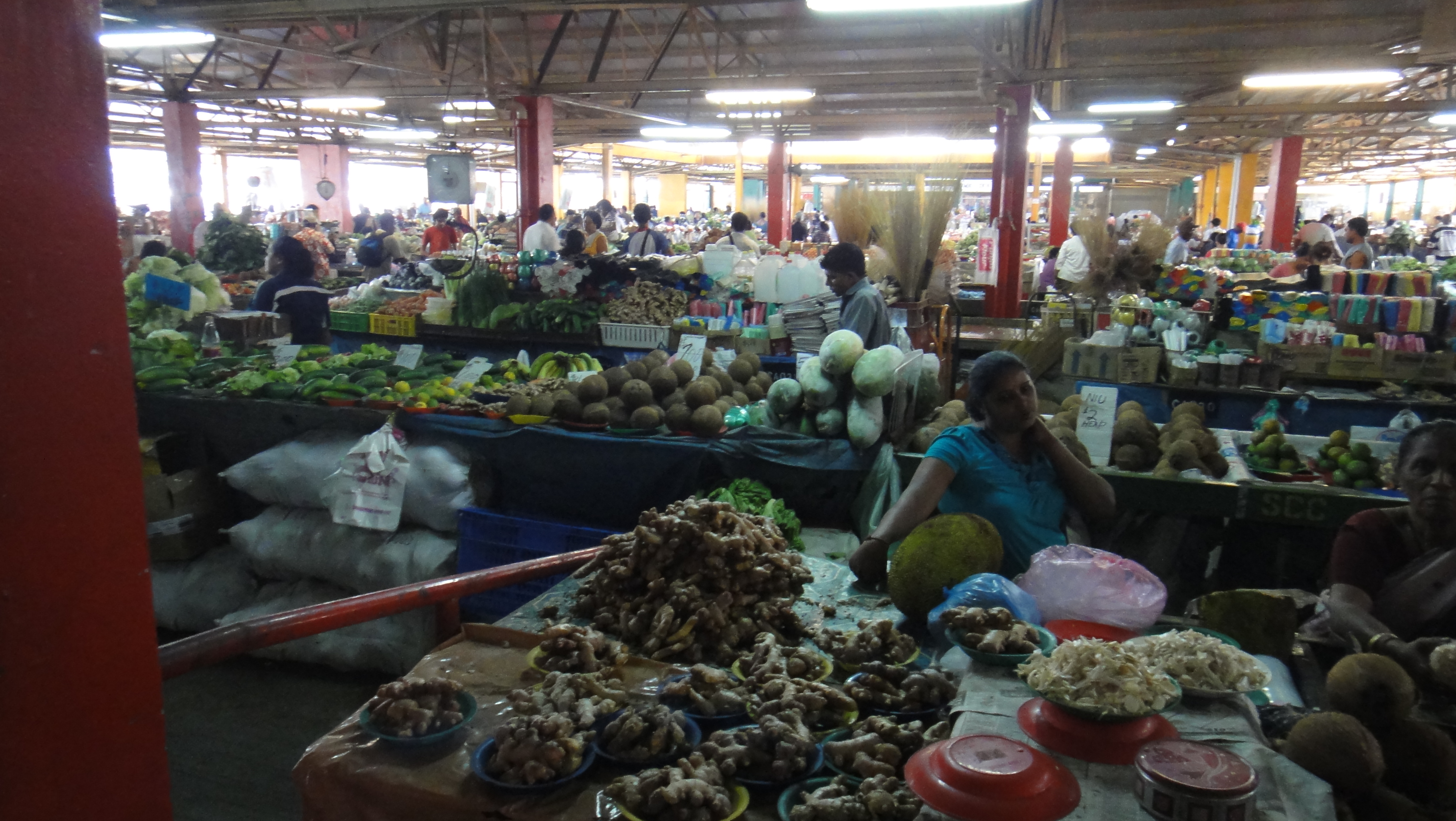 There were a few handicraft stalls at the far end of the hall – ladies selling sula, dresses, mats and bags made of pandana leaves.
The taxi ride to Purefiji was interesting – 13 is an awkward number to fit into taxis that carry four people – so Jill and Jo each went with 3 girls, the remaining 4 girls went in one taxi in convoy with the others and I followed on my own. My driver quickly fell behind and it soon became clear that he had little idea where he was going! I arrived a good 10 minutes after everyone else after several frantic text messages from Jo wondering where I was! My phone came in very useful for finding directions!  We spent a happy hour or so trying out and buying beauty products before emerging laden with smelly stuff!
We have been struck by the friendliness of the Fijians and especially by the kindness of the bus passenger who having tried, in vain, to explain to us where we needed to be to get the bus to Nakasi, said to a young man who just happened to be walking by ” Bro, can you show them where to go?” (Well, I’m guessing that’s what he said, ‘cos it was in Fijian!) Said young man then led us for the next half a mile or so all the way to the bus stop. What a wonderful boy! I chatted to him as we walked and found out that he was a student at the maritime college and is aiming to be the captain of a container ship. That will give him the opportunity to travel and earn a better wage than he can in Fiji. He plays rugby – half back or 1st 5/8th and his uncle played for Fiji. He is hoping to visit NZ next year. I hope that he meets with the same kindness and generosity of spirit that he showed to us.
After dinner this evening the girls took the clothing that we had brought for the teenage girls at St Christopher’s and they enjoyed a pleasant evening chatting and sharing stories. 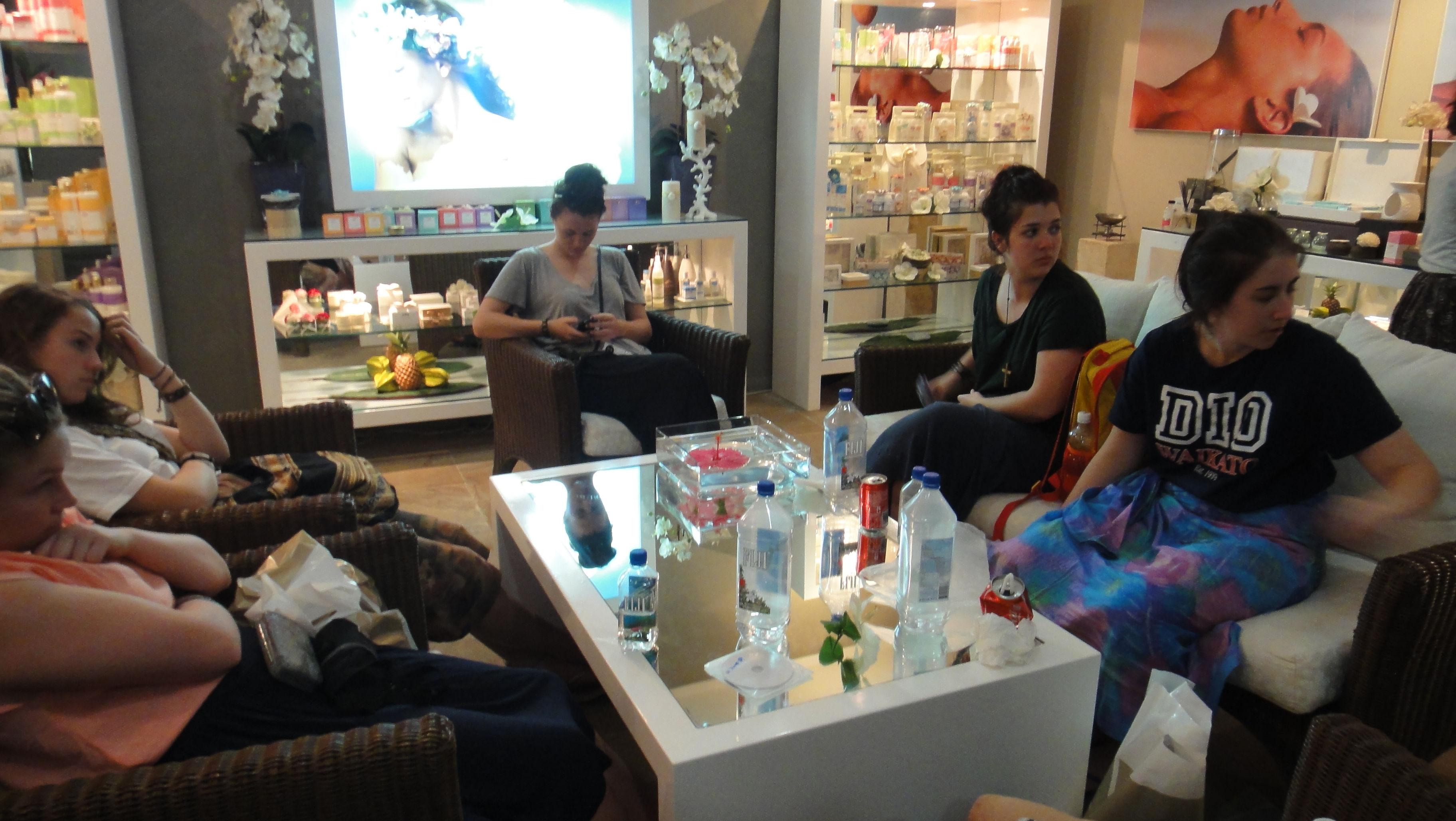 The girls have learned a lot this evening – one of the comments from them when they came back was “They are just like us – they go on Facebook and like music and make-up”. I think some perceptions have been challenged! Sister Kalo and Sister Mary came and joined us for coffee and we had a good old natter which was lovely. It was interesting to hear about their lives here and find out more about the children and what happens to them when they leave the shelter of the Home. The boys leave to go to a boys home in Nandi at the age of 12 but all the children have to leave at the age of 18 when they are no longer under the auspices of the equivalent of Social Services care.
I have a huge bite on my bum! The geckos are clicking outside and there has just been a bit of a shower. Rain has been in the air since this afternoon – maybe a bigger downpour would clear the humidity a bit. The dogs are quiet for the moment and the cockerels have not yet started – maybe I will try to sleep.
Fiji 2012
 Early, early start on a freezing Waikato morning. Scraping ice off my windscreen at 3am is not something I want to get used to. However, I did manage to sleep in the minibus on the way to Auckland airport along with the rest of the party once the initial excitement of finally getting away wore off.
I am one of three teachers and ten students heading to Fiji to provide support – moral, spiritual, physical and financial – to St Christopher’s Home in Nasaki, Suva and Bureta village on the tiny island of Ovalau.
Travelling is always exciting, especially when it is the first time you have visited a place; the anticipation and the curiosity – will it be what you imagined? What will the people, the landscape, the buildings, the food and the culture be like? The hanging around in airports, checking baggage in, eating aeroplane food, being squashed in tiny seats is not quite so exciting but it is all part of the journey and we make it what we can. It was good to have some time to get to know the girls – I don’t teach any of them and so they come to me as blank canvases which is great. It was also good to grab a coffee to boost the system. Teenage girls will be teenage girls and after much dilly dallying around we found ourselves walking more briskly than we had planned to our gate for our flight.  I snatched a welcome hour of sleep during the flight before we arrived in Fiji and felt almost human! The warm air hit us as we stepped off the plane – in some ways it was welcome and very pleasant as it seeped into a body that had spent the previous 48 hours deeply chilled.
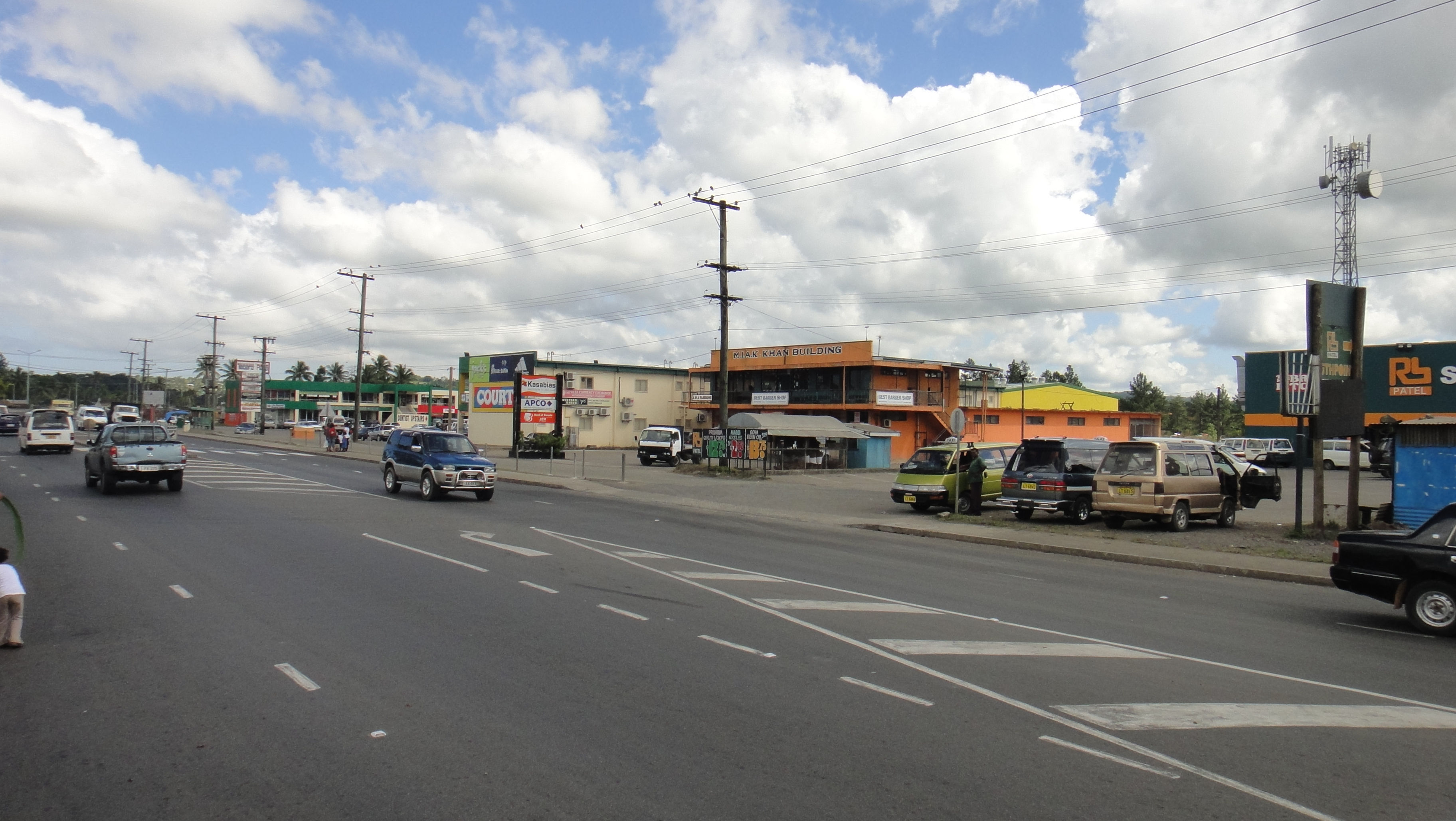
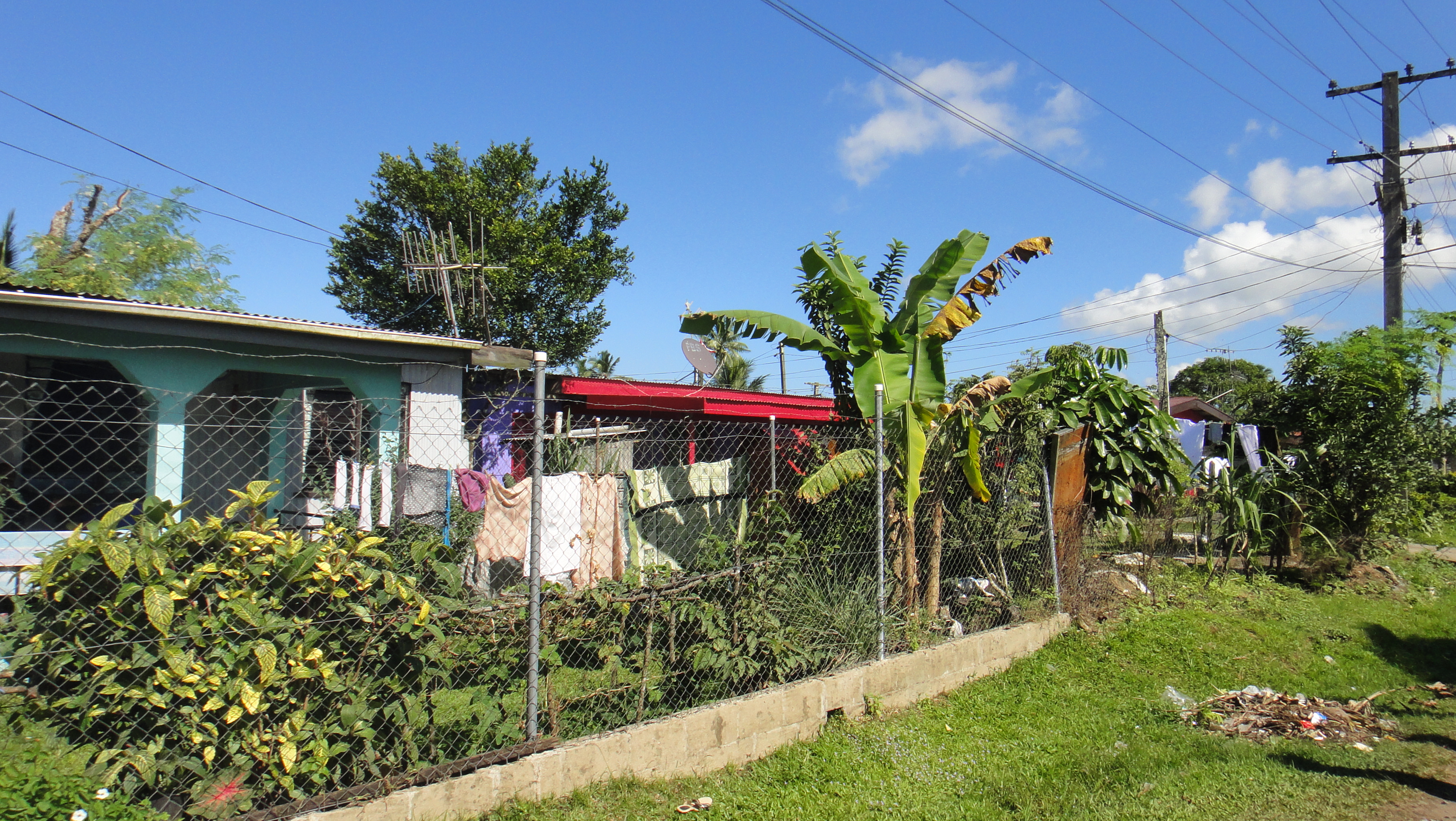 The novelty soon wore off as we queued in a packed immigration hall which large slowly turning ceiling fans struggled to keep cool. However, by the time we made it through and out into the “fresh air” we realised just how much work the fans had been doing! We were met by the Sisters of St Christopher’s and Rev Jill was whisked away by them as Jo and I clambered aboard the bus with the girls. Air-con in the bus came in the form of open windows and doors – the breeze was welcome as we bounced along the road from Nausori to Nasaki. I had already glimpsed the verdant countryside of Fiji from the plane as we flew in. Now I could see just how lush the land is even here in the city. Banana trees, coconut palms, wide green leaves and gardens full of flowers flashed by and I was amazed too by the size of the river we crossed. Interesting also that the Rewa Bridge spanning the river was jointly funded by the European Union and the Government of Fiji.
 I am curious about the number of car wash stalls I saw on the way – is there a huge demand for clean cars? Or maybe it is an indication of high unemployment? Car washing is an easy business to set up and I guess money would be cash-in-hand. I was also amazed by the number of Grog stalls and just as in Cambodia and Vietnam the were plenty of roadside stalls selling fruit and vegetable, sim cards, phone top up cards and mobile phones. There were also quite a lot of second hand car lots and yards selling car parts. We entered “Rugby Country” – huge hoardings celebrating the Fiji 7s team’s victories and a rugby stadium that appears to be an uneasy assemblage of ironwork; not sure I’d like to be high up in the stand! The houses were an assortment of styles and sizes; some were made of concrete blocks, some wooden and others corrugated iron, all painted in an aray of bright colours. They nestled higgledy-piggledy in dips and hollows or stood proud on brows of hills, each surrounded by generally well-tended gardens. It seemed that the more well off lived cheek by jowl with the poorer as ramshackle corrugated iron houses were mixed in and amongst the more expensive looking concrete ones.
 We soon turned off the main road and into a smaller street where we came to the, quite imposing, gates of St Christopher’s Home. My first impressions was that this was a reasonably wealthy establishment – the large gateway with the name in wrought iron above it leads down a driveway to the main building which had beautifully tended gardens around it. A §2 tip meant that the driver unloaded our luggage for us. We were immediately greeted by a little huddle of wide-eyed children from the pre-school who had waved enthusiastically at us as we drove in. “Bula” is the greeting used at all times of the day and we quickly learned to use it as everyone in Fiji greets everyone else – it is considered rude not to say “Bula” to anyone you cross in the street or in shops or buses.
 The Home is quite extensive and as I already said it seems to be reasonably affluent, whether this is because people like us bring goods and donate money or because the church is well off, I don’t know. I was struck by how well-maintained the beautiful gardens are – brightly coloured flowers, tall coconut trees, banana trees and veggie gardens. The guest accommodation – The Light House – is basic but comfortable. We were glad to put our bags down and get changed into something more appropriate to the heat and humidity. First stop – local supermarket for some basic supplies for breakfast as we were all starving. Jill also needed to go to Suva to get the ferry tickets to Ovalau.
 After an interesting walk through the locality to the supermarket we ate lunch and then the girls were keen to go into the nursery to play with the children. Some girls helped in the garden and we sat and weeded and talked to one of the ladies who worked there and we found out that the numbers 1 – 10 are almost identical to those in Maori. She also told us some other words in Fijian but, unfortunately, I can’t remember them. Hopefully later in the week I can find them out and learn them again. Her daughters Filo and Nani arrived back from school and we chatted to them for a while and then one if the girls excitedly pointed out a boy climbing a coconut tree!
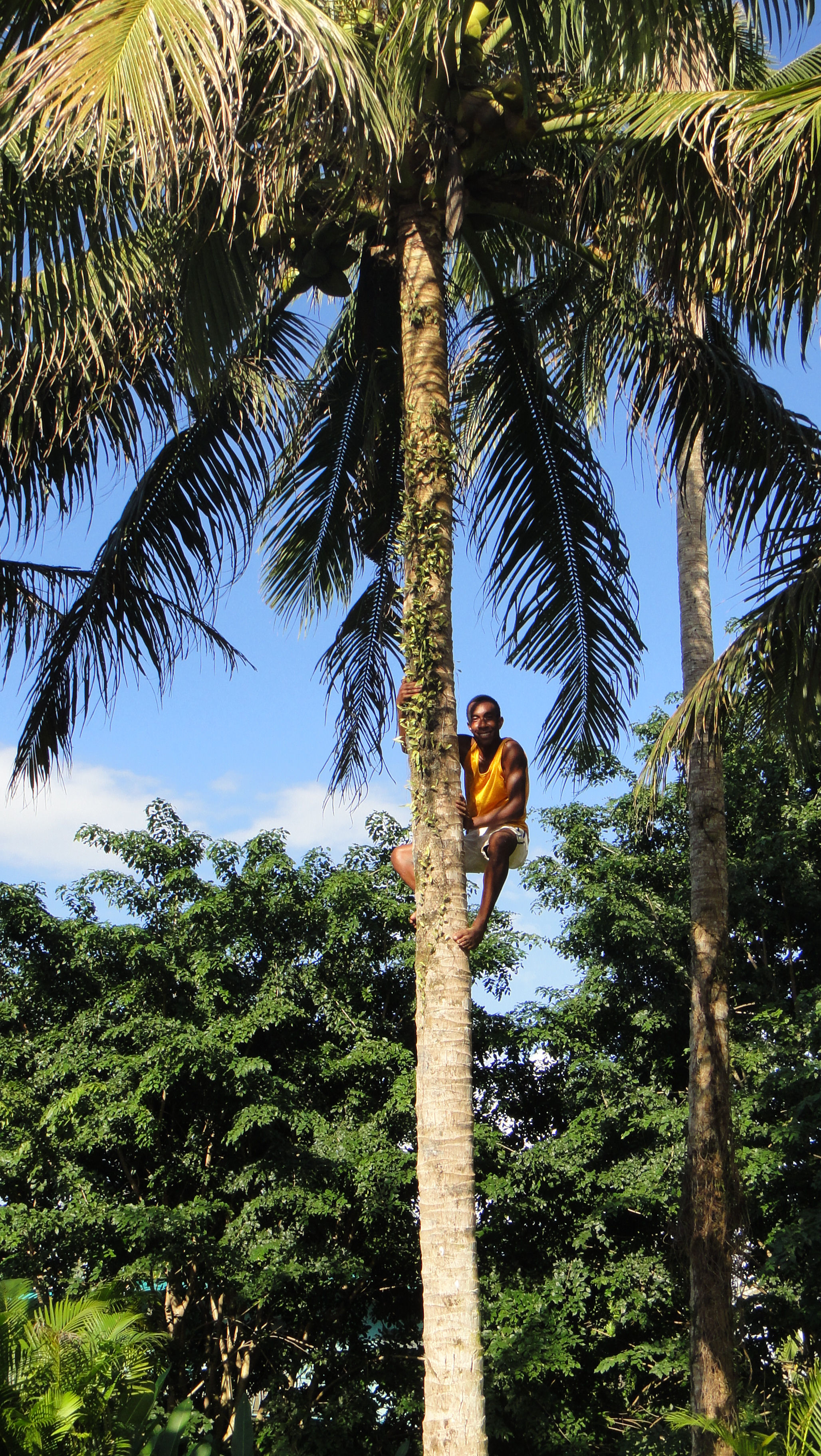 This, of course, is probably an everyday occurrence in a country where there are so many coconut trees, but it is a complete novelty for our girls from the Waikato! It turned out to be the son of the lady we were talking to and he was soon high up in the tree and dropping down ripe coconuts which one of the men expertly sliced with a dangerously sharp looking knife and handed to us to drink the sweet coconut juice inside. I am not a great fan of coconut milk but fresh from the tree it is refreshing and sweet.
By now the older children from the Home – apparently it used to be called an orphanage but the preferred term now is Home – had arrived back and our girls went to meet them and help the younger ones with their homework.
After dinner we joined the children and the Sisters for prayers and singing which turned out to be quite an event. All the students sang beautifully – ours included – and they clearly enjoyed themselves. Our girls taught the St Christopher’s children action songs and the St Chris children delighted our girls too and they came away with a new repertoire. Wonder if they will remember them when we get back to school? We were all amazed by te prayer and psalm recitals – all in English, long and complicate language and repeated parrot-fashion. I wonder how much of it they understand? 
It has been a long day and we are hot and tired. Cold showers are actually quite welcome – just as well since there is no hot water! The evening was punctuated with shrieks from the girls as geckos darted across the walls but they soon settled down to bed.
15th May 2012
 15th May and we are challenged to take a photo diary of our days – these are the photos that I uploaded to the ADAY site
Cambodia & Vietnam slide show
A slide show of some edited photos from Cambodia and Vietnam
http://images.travelpod.com/bin/tripwow/flash/tripwow.swf
Cambodia & Vietnam Slideshow: Anne-Louise’s trip from Auckland, North Island, New Zealand to 6 cities Kuala Lumpur, Siem Reap, Phnom Penh, Hoi An, Battambang and Buon Ma Thuot was created by TripAdvisor. See another Malaysia slideshow. Create your own stunning free slideshow from your travel photos.
Chilean Slideshow
Having a play with a different application – check it out!
http://images.travelpod.com/bin/tripwow/flash/tripwow.swf
Santiago, Chile 2007 Slideshow: Anne’s trip from Kirkby Lonsdale, Cumbria, United Kingdom to 4 cities Santiago, Valparaiso, Maipú (near Farellones, Chile) and Andes, Chile (near Los Andes) was created by TripAdvisor. See another Chile slideshow. Create your own stunning free slideshow from your travel photos.

